Tag Archive for 'Vacuums'

Page 3 of 3

In the Future, a Robot Gecko Will Clean Your Windows

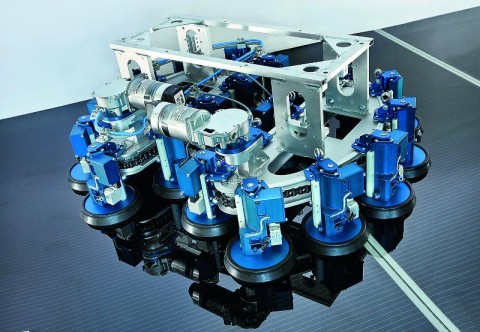
Gecko Cleaning Robot on Glass Surface

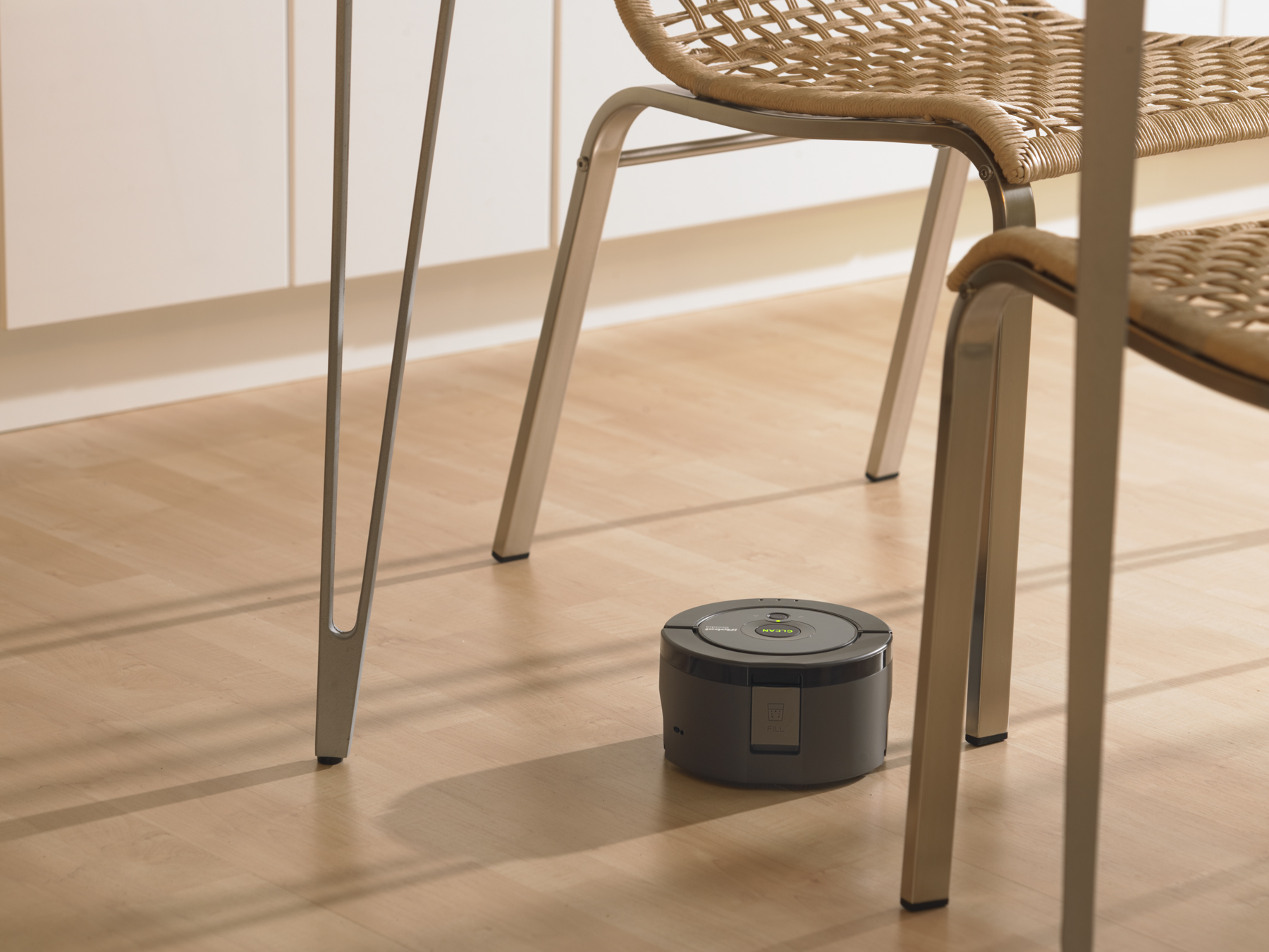
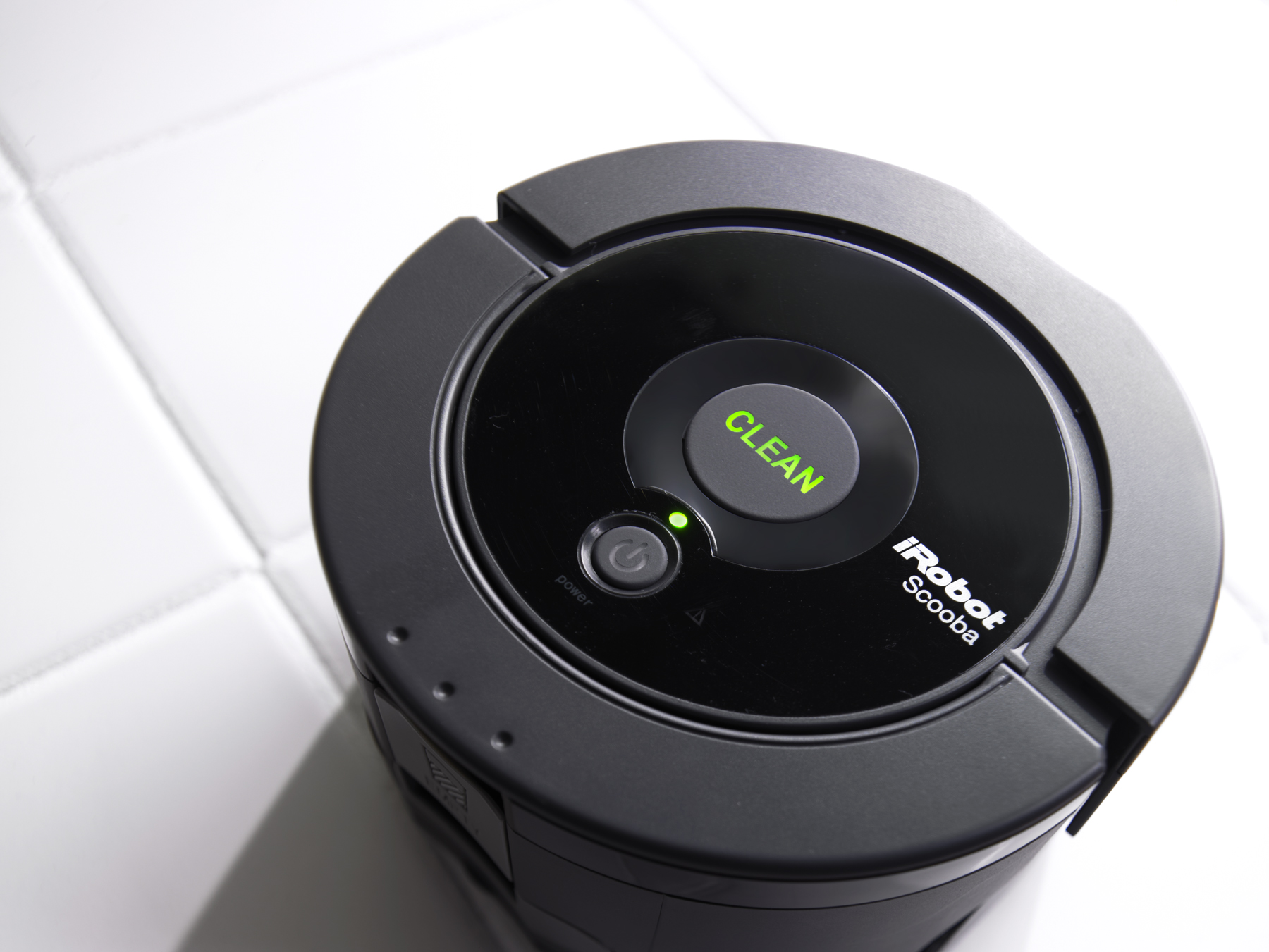
Serbot AG, a Swiss robotics firm is designing what looks like a Scooba robot with legs for cleaning large solar panels. To accomplish this goal, they used parts manufactured by Festo. I don’t usually get into large pictures on this site, but this thing is really cool looking, and it’s rare to find such a cool looking thing that is also a cleaning robot.

I’ve never thought about this, but apparently keeping large solar panels clean is a real pain and can be dangerous. They get covered with leaves, dust, pollen, pollution, and everything else that falls on them. Solar farms often have to clean them at night, and I guess it’s not as simple as turning a hose on them. The photovoltaic panels are delicate, slippery, and usually tilted at an angle. As more and more solar farms are built with more and more solar panels, cleaning them is going to be a real issue.

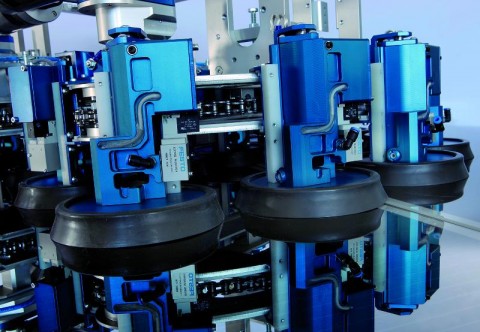
This sounds like a great place to apply some robot elbow-grease. You just build (or buy) an army of these little suction-cup footed robots and equip them with brushes, wipers, and maybe a spray bottle and a vacuum hose? The cleaning robots are made with twenty suction-cup feet on two kidney-shaped carrier frames. As you can see from the photos, the carrier frames are chain tracks, which are attached by a bridge. I would guess that’s where you connect the cleaning devices. To move, the robot rotates the feet around the carrier frames. It looks to me like the feet in the center of the device are the ones that will be engaged with the surface it is cleaning.

Gekko Cleaning Robot Closeup

The robot is designed to know that it has reached the end of a solar panel by feel. Basically, if it can’t get a grip, it withdraws. While this sounds like a cool idea, I wonder why they can’t use something more sophisticated? They solved the problem of how to keep suction by making sure the robot is always moving. The feet which are in contact with the surface at any given time only keep suction for two seconds. This makes it so the robots can travel without using so much energy to hang on.

Photo Source: Festo

iRobot Announces 5 Million Unit Milestone

In a press release today, iRobot Corporation (listed on the NASDAQ as IRBT) announced that they had passed the sales milestone of five million home robots. Five million! That’s a lot of robot vacuums. iRobot has been selling Roombas since 2002.

“This achievement represents a huge milestone for iRobot and for the robotics industry as a whole,” said Colin Angle, chairman and chief executive officer of iRobot. “We set out to create practical robots that help people accomplish tasks they don’t like to do, and in many cases, don’t have time to do. With over five million home robots sold, we have seen a widespread acceptance of this technology. This further fuels our drive to innovate and provide solutions that make a difference in people’s lives.”

The press release goes on to detail the achievements of the company and features of the robots which have propelled the popularity of its robot vacuum cleaners. Some of the features they talk about in the press release include:

  • The behavioral algorithms which make the robots clean floors more effectively.
  • Technology for detecting obstacles before the Roomba runs into them.
  • The low profile of the Roomba, which makes it ideal for vacuuming under furniture.
  • Dirt Detect: The robots sense dirt and change their behavior to spend more time in dirty areas.
  • Anti-tangle technology, which keeps the robot vacuums from getting caught on cables and fringes on rugs.
  • The spinning side brush.
  • Scheduling: So that you can have the robot clean your house when you’re not home.
  • Cliff detection to keep the vacuum cleaners from falling down stairs.
  • Automatic surface adjustment so that the robots can transition between different floor surfaces.
  • Round shape: Here’s one I haven’t thought about. iRobot says that the round shape of the Roombas helps keep them from getting stuck.
  • Home base with charger.

The press release goes on to detail the price range of Roombas, emphasizing that the entry-level robot is around US $129, and also mentions some of iRobot’s other robots for cleaning around the house. So the Scooba, Dirt Dog, Looj, and Verro. Here’s a link to the official press release on iRobot’s site.

New Robot Vacuum Cleaner: Neato

Neato VX-11 Robot VacuumIt looks like the iRobot Roomba is going to have some more competition. A company named Neato Robotics has introduced their own robot, named the XV-11, due out in January 2010 (estimated price is US $399). The XV-11 robot vacuum resembles a Roomba in that it is short, but instead of being round, it has two square corners in the front of the robot. Neato explains that these make the robot more able to vacuum into corners.

While that’s the most obvious difference, it looks like there are others worth noting. The XV11 users lasers and a mapping technology known as SLAM (simultaneous localization and mapping) to create a map of any room before it starts to vacuum. The vacuum will start by circling the perimeter of a room to create a map. Large rooms are broken up into fifteen foot square areas. A laser on the top of the robot is used to identify walls, furniture, and doorways. Then the robot vacuum concentrates on path finding and obstacle avoidance. Once the initial map is made, the robot will start at one end of the room and methodically go back and forth across the room like it’s swimming laps to cover all the space. This is in contrast to the iRobot Roomba, which uses a few different “behavioral” algorithms to cover all the floorspace in a room, and which works in a more chaotic manner.

Unlike the Roomba vacuums, which use virtual walls and lighthouses to control how the robots go from room to room, the Neato can distinguish doorways. So you can set it in “Room Mode” and it will stay in one room. If you want it to clean the whole house, you set it to “House Mode” and it will go from room to room. The vacuum is designed to clean each room completely before moving on to the next.

Like a Roomba, the Neato XV11 can locate its charger and automatically charge. Some other features it shares with Roombas are: cliff detection, scheduling, a removable bin, and variable floor vacuuming. So it can vacuum linoleum, carpet, etc. The Neato robot is much more loud than the Roombas, which the company explains is due to the fact that the vacuum has more suction. The Neato vacuum also has a LCD display so you can see its status. Battery life is estimated at an hour.


© 2009-2012 Technollision Media All Rights Reserved

Page optimized by WP Minify WordPress Plugin