iRobot Roomba 530 Features

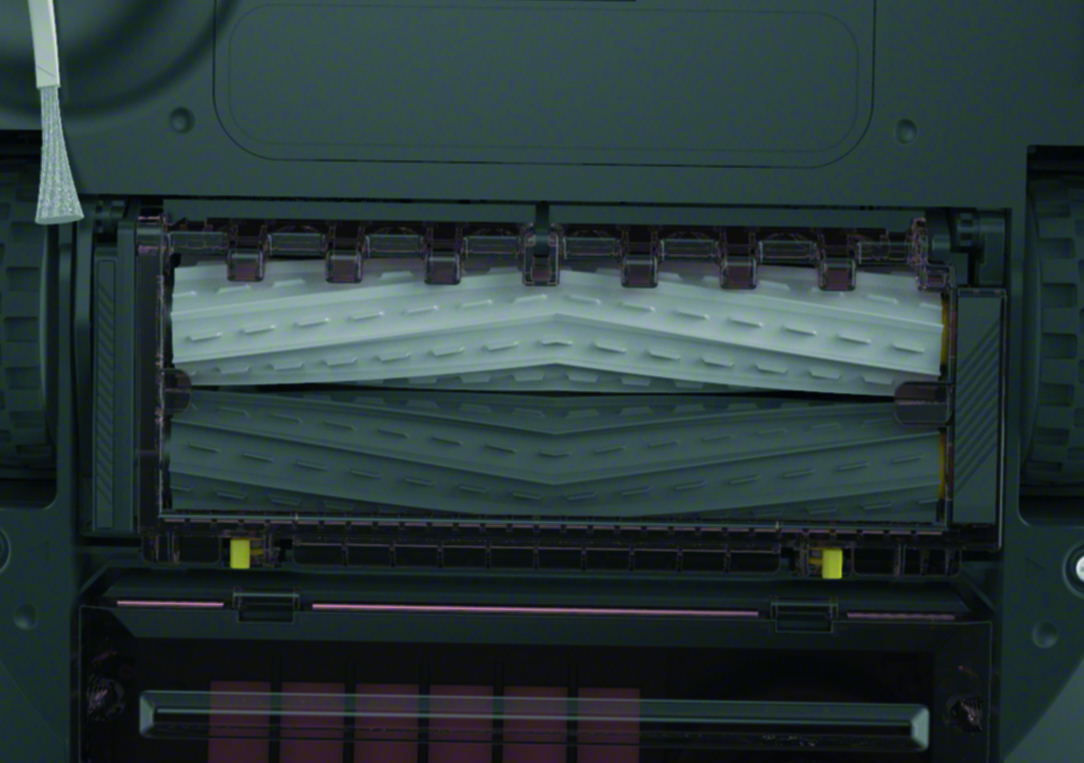
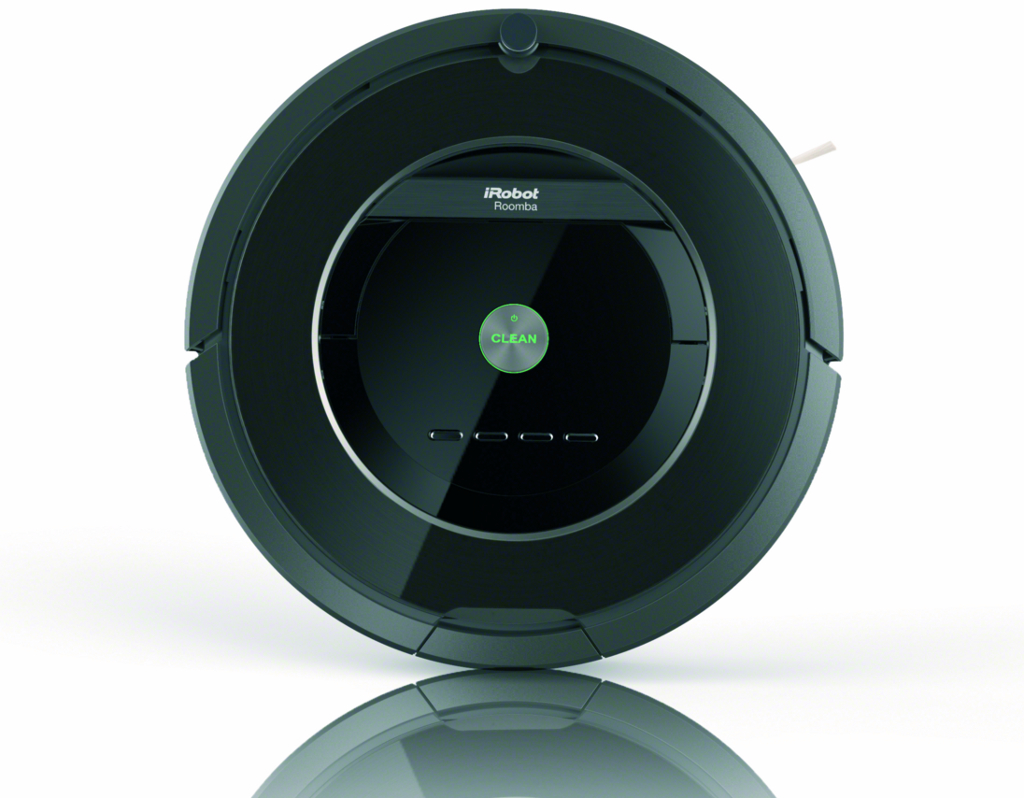
iRobot Roomba 530 vacuum cleanerThe 500 Series Roombas feature technologies that aren’t available in the 400 series. They run longer on a battery charge, and are compatible with some of the more advanced accessories. The counter-rotating brushes, which pick up larger debris, run faster and have an improved design. The robot comes with better filters that stop more dust and allergens. iRobot made improvements to the spinning side brush so that it gets into corners better. The larger dust bin allows for more use between emptying. Technology for keeping the Roomba from getting tangles on cables, carpet fringe, and rug tassels as been improved upon. The iRobot Roomba 530 comes with a self-charging base and two virtual walls. The difference between the 530 and the 532 Pet Series is the 530 doesn’t come with: Extra High Capacity Sweeper Bin, Extra Brushes and Filters, and Extra Cleaning Tool.

What comes in the box:

  • The Roomba 530
  • 2 Compact Virtual Walls
  • Home Base for Self-Charging
  • Extra Filter
  • Rechargeable Battery
  • Three Hour Charging Power Supply
  • 1 Year Warranty

As with all Roomba robot vacuum cleaners, the 530 will sense cliffs and drop-offs so that it won’t fall down steps. This robot can detect areas with more dirt and will circle over them to clean the area more thoroughly. You can also use the “spot clean” feature, where you tell the robot to clean up a small area quickly. This is great for spills or spots that need more frequent cleaning. The Roomba robots use filters to capture dust, pollen, and other allergens in your home, and vacuum each floor completely, going under furniture where it can. The dust bin is bagless. Roombas use a multi-stage cleaning technology to vacuum floors. First, a spinning brush grabs debris and pulls it toward the vacuum intake. Counter-rotating bristle brushes “beat” the floor and grab larger particles of dirt. Next, a powerful vacuum sucks up finer particles. On carpet, the brushes will work deep into the fibers to get at pet hair and dirt under the surface.

  • Customer Rating: 4.5 out of 5 stars
  • Warranty: 1 year
  • Charging Time: 3 Hours
  • Detects Dirt: Yes
  • Spot Mode: Yes
  • Max Mode: No
  • Self-Charging Home Base Compatible: Yes
  • On-Board Scheduling: No
  • Light-Touch Bumpers: Yes
  • Advanced Anti-Tangle Technology: Yes
  • Improved Edge and Corner Cleaning: Yes
  • Room-to-Room Navigation: No
  • High Capacity Bin: Optional
  • Wireless Control: No
  • Lighthouse Technology: No
  • Virtual Walls Included: 2
  • Lighthouses Included: 0
  • Wireless Command Center Included: No
  • Extra Brushes: No
  • Carrying Case: No
  • Extra Filters Included: 1
  • Bonus Accessory Kit: No
Bookmark and Share

Dyson Announces the City DC26

Dyson DC26 Vacuum CleanerWell, it’s not a robot, but it’s a curious vacuum cleaner, and seeing as how the Dyson robot vacuum cleaner (the DC06) has yet to appear, maybe now that there’s a really tiny Dyson, the DC06 is closer to becoming a reality?

The DC26 is the smallest and lightest Dyson ever created, and I guess that’s saying something because the company has a reputation for building huge vacuum cleaners. According to Dyson it was designed with Japanese homes in mind, and is a snap to maneuver and operate. Obviously, this would also be a great gadget for hip city people who live in apartments or condos, because it won’t take up much storage.

This tiny vacuum uses Dyson’s patented Root Cyclone technology, which has been proven to be better at sucking up dust than any other vacuum. Root Cyclone technology is what makes Dyson vacuum cleaners so effective. Unlike conventional vacuums which use bags, the Root Technology uses several levels of centrifugal force to spin dust, dirt, hair and debris out of the air. as a result, they don’t loose suction as a result of the bag (or filter) filling up. The DC26 also features the new V-Ball technology which makes for smooth rolling, easy maneuvering, and also helps keep the cleaner head at the ideal height from the floor to optimize suction.

So if you’re looking at the photo and wondering how the vacuum is going to work, it’s a canister vacuum cleaner. So the part in the photo is what you plug a hose into. Then there are various attachments, including a cleaning head that you can use to vacuum with. In Japan, there are three models. They are the DC26 Turbinehead Entry, the DC26 Turbinehead Complete and the DC26 Motorhead Complete

Apparently, to make such a small vacuum cleaner with Dyson’s Root Cyclone vacuum, the designers couldn’t just miniaturize the parts and expect it to work. The engineers found that they needed to balance all aspects of the vacuum cleaner, its weight, size, and durability, with the amount of space that is needed to maintain the airflow needed for cyclone cleaning. To do this, Dyson says:

“It took us five years to painstakingly compress and rebuild every single component before we had a machine that was a third smaller than its predecessor, yet could still tackle dirt like bigger machines.”

This vacuum cleaner won the Japanese 2009 Good Design Awards Gold Award in the Living category. The cleaner weighs a little more than seven and a half pounds, and will fit in a space the size of an A4 sheet of paper. The exact dimensions are: Width 320 mm × Height 266 mm × Depth 205 mm. Apparently, it’s also amazingly durable, having survived being dropped on a hard floor over 5000 times (presumably from more than a few inches) and also being banged against a wall 10,000 times. That’s quite a bit of abuse. The Dyson City DC 26 is already available in Japan and will be sold in the U.K. soon. The U.K. price will be the equivalent of around $400. I won’t be buying this one, but feel the need to repeat that I’m really dreaming of one of these powered by a robot. Yeah! Let’s go Dyson robot vacuum cleaner!

Bookmark and Share

Sparky Jr. DIY Telepresence Robots

In Progress Sparky Jr.Sparky Jr. is a website dedicated to providing support for robot enthusiasts to create their own DIY telepresence robots. Telepresence (or TP, as insiders refer to it) is technology for enabling people to see and hear distant locations, usually through a computer screen. The Sparky Project takes it a step further by presenting a design for a robot that can provide a mobile platform for telepresence. This platform uses Skype for the video connection, a Mac Mini for the brains, and an iRobot Create to get around. After that, you just need a battery, some speakers, a microphone, webcam, and some other miscellaneous hardware, and you’re ready to go.

The Sparky Jr website hosts instructions, software, parts lists, and templates, as well as a forum, member pages, and instructional videos. Among other places, the Sparky project has been featured in Make Magazine, Modern Marvels, the San Francisco MOMA, and the San Jose Museum of Art.

The man behind Sparky Jr is Marque Cornblatt. I got the opportunity to ask Marque some questions about the Sparky project. Here it is.

RVC: It looks like you standardized on the iRobot Create for a base. Why?

The original bot had a custom welded base and drive train from a motorized wheelchair.  This is a big, fast and robust platform, but heavy and tricky to build for many people.  The Create is a great, inexpensive platform that is easy to work with lightweight, sensor-laden and versatile.  I looked at other, more “serious” robot platforms, but they cost many hundreds or thousands of dollars.

RVC: While we’re on the topic of standards, why the Mac OS?

I use PCs and Macs but prefer Mac.  the choice of the Mac Mini onboard the bot sealed the deal.  Sparky will have a PC version of the software soon so users can choose their own preference.

RVC: We are already seeing telepresence robots in industrial, law enforcement and military applications. Mostly in cases where it is too dangerous to send humans. Do you see any different future applications that may be just around the corner? (Especially applications for consumers?)

Like so much new tech, it gets developed and deployed for military and law enforcement first and eventually trickles down to consumers.  Telepresence is the same.  Ultimately I see TP uses in educational environments, museums (as tour guides) and a wide range of social and entertainment activities.  Maybe the biggest use is for chatting with and interacting with babies and young children when the parent is at work or on vacation.  Sparky would never be a complete babysitter, but can allow a distant parent to get face-to-face with the child on the floor and chat from anywhere in the world.  That is a powerful tool for parents.

RVC: It seems like there are already some off-the-shelf telepresence packages available, or coming soon. Can you tell us advantages of building a Sparky Jr. over one of those?

Over the years, I’ve watched as several companies tried to bring TP to consumers (HeadThere, Anybot, Rovio, ConnectR, Spykee).  These products usually fall into 2 categories:

1) WAY too expensive.  With prices ranging from $5000-$250,000   Sparky costs aprox. $1000 to build

2) Underpowered.  Many support 1-way video only or only present a still image, which is not as useful as true face-to-face video communication.

Also, these off-the-shelf bots offer nothing in the way of user customization.  The Sparky design can be almost any size or shape bot the user wants (hint:  Wait until Apple releases their tablet and you’ll see a new Sparky design soon afterwards).

RVC: How much use does the Sparky Jr. software make of the iRobot Create’s sensor data?

Sparky uses the bumper and edge data to control movement.  The bot will override a drive command if the bumpers are activated or senses an edge or staircase.  Also, we add new features all the time.  Next up is homing so the bot can find the recharging base without human intervention, and some autonomous routines for home security (imagine Sparky roaming the house while you’re at work.  It records any unusual movement or activity and actually emails of Skypes you with live updates).

RVC: Can you build a Sparky Jr. on a Roomba vacuum cleaner, or is it better to use a iRobot Create for the platform?

I believe that any roomba with a serial connection (most of them) will work.  You may need to dissasemble part of the shell to access it on some models.  Others have a convenient removable cover.  Another nice aspect of the Create is that there is extra space where the vacuum guts would go.  This extra space is filled with components that would otherwise be strapped on and bulging.

RVC: Do you have any plans to add any sort of haptics to Sparky Jr? If so, what do you think would be the most useful application for haptics in telepresence?

I don’t, but I encourage others to experiment.  The reason I stay away is about identity and technology.  Generally, people want robots to “do their work” for them and many bots are being developed as workers (lifting, carrying, fetching).  I have always viewed Sparky as an equal, not a servant and putting grippers or arms on the bot would encourage the use of Sparky as a labor-saving device.  I hope to establish the idea that a machine-human hybrid is not subservient or inferior to organic people.

RVC: Any future plans or dreams of where to go with this project in the near future?

My ultimate goal with this project is to share it with others and build a community of user/makers.  That is why I set up Sparky Jr. with all open-source software and links to hardware and templates and videos.  Ultimately I hope to see a world full of custom build TP ‘bots based on the basic Sparky design.  Where the community takes the idea  is up to them, and I can’t wait to see some of the other versions that people come up with.

Many thanks to Marque for answering my questions. If you are interested in the project, you should go to the Sparky Jr. website, sign up, and take a look around. If you have a little extra time you should also check out another one of Marque’s websites, Guns ‘n’ Gardens.

Bookmark and Share